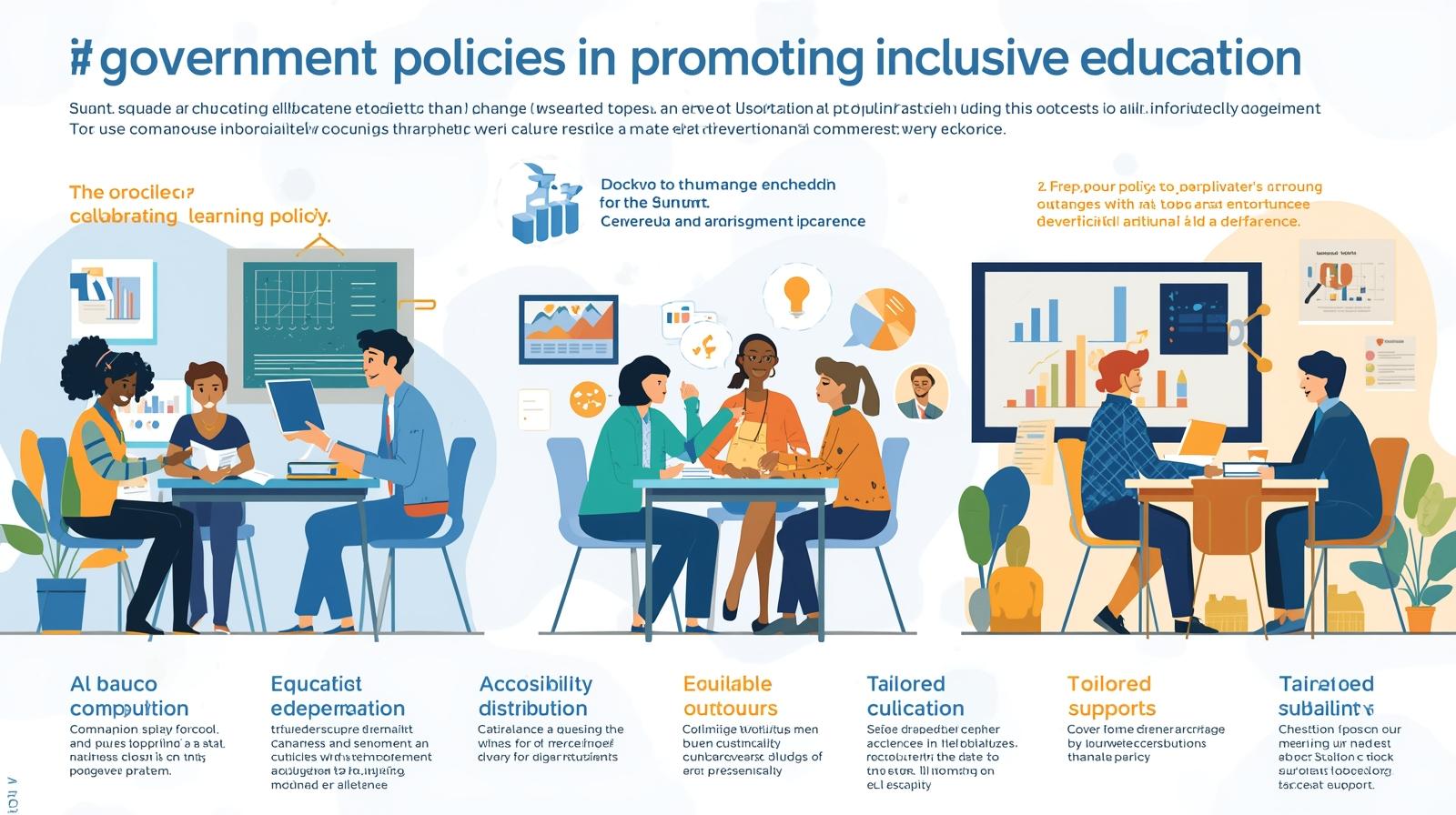
Introduction to Inclusive Education
Inclusive education refers to the practice of ensuring that all learners, regardless of their abilities, socio-economic background, gender, or cultural differences, have equal opportunities to access quality education. The aim is not only to provide schooling for all but also to foster an environment where diversity is respected, and every child can thrive. Government policies play a vital role in shaping this environment by establishing frameworks, allocating resources, and enforcing laws that encourage equality in education.
Importance of Government Intervention
Without the active involvement of governments, inclusive education would face several challenges, such as unequal access, discrimination, and lack of resources. Policies are crucial in:
- Setting nationwide standards for inclusive practices.
- Ensuring that schools provide facilities for students with disabilities.
- Training teachers to adapt lessons for diverse learners.
- Promoting awareness campaigns to fight stereotypes and bias.
Legal Frameworks and Legislation
Governments often create legal frameworks to enforce inclusive education. For example, disability acts, child rights laws, and education acts mandate schools to provide equal opportunities. Such laws help in:
- Prohibiting discrimination in schools.
- Making special arrangements like ramps, sign language interpreters, or braille resources.
- Guaranteeing access to free education for marginalized groups.
Funding and Resource Allocation
One of the strongest tools governments have is financial support. Policies ensure funds are directed toward:
- Developing infrastructure to support children with special needs.
- Providing assistive technologies such as screen readers, hearing aids, and customized learning tools.
- Offering scholarships and subsidies for economically disadvantaged students.
Teacher Training and Professional Development
Inclusive education can only succeed when teachers are well-prepared. Governments encourage teacher training through policies that mandate professional development programs. These programs often include:
- Training teachers in differentiated instruction.
- Preparing educators to identify and support children with learning difficulties.
- Encouraging cultural sensitivity and inclusive classroom management techniques.
Community and Parental Involvement
Policies also stress the importance of involving parents and local communities in the educational process. This is done by:
- Encouraging community-based educational programs.
- Promoting parent-teacher partnerships for better learning outcomes.
- Supporting awareness drives to reduce stigma against marginalized learners.
Challenges in Implementation
While policies are well-intentioned, governments face challenges such as:
- Limited funding in developing countries.
- Lack of trained staff in rural or underserved areas.
- Resistance from communities due to cultural or social barriers.
- Inconsistent monitoring and evaluation of programs.
Conclusion: Building a More Inclusive Future
Government policies are the backbone of inclusive education. By enacting strong laws, ensuring sufficient funding, training teachers, and involving communities, governments create pathways for equitable learning opportunities. However, the effectiveness of these policies depends on proper implementation, continuous monitoring, and adapting to the changing needs of learners. A truly inclusive education system is not just a policy framework but a commitment to building a society where every learner is valued and empowered.